Key Takeaways
- Screen time doesn’t directly cause myopia, but it can contribute to its progression in children.
- Reduced outdoor time plays a bigger role in myopia development than screens alone.
- Simple habits like the 20-20-20 rule and the elbow rule can help reduce eye strain.
- Annual children’s eye exams can catch vision changes before they affect school and daily life.
- Myopia management options, including ortho-k lenses, are available for kids.
What Screen Time Actually Does to Your Child’s Eyes
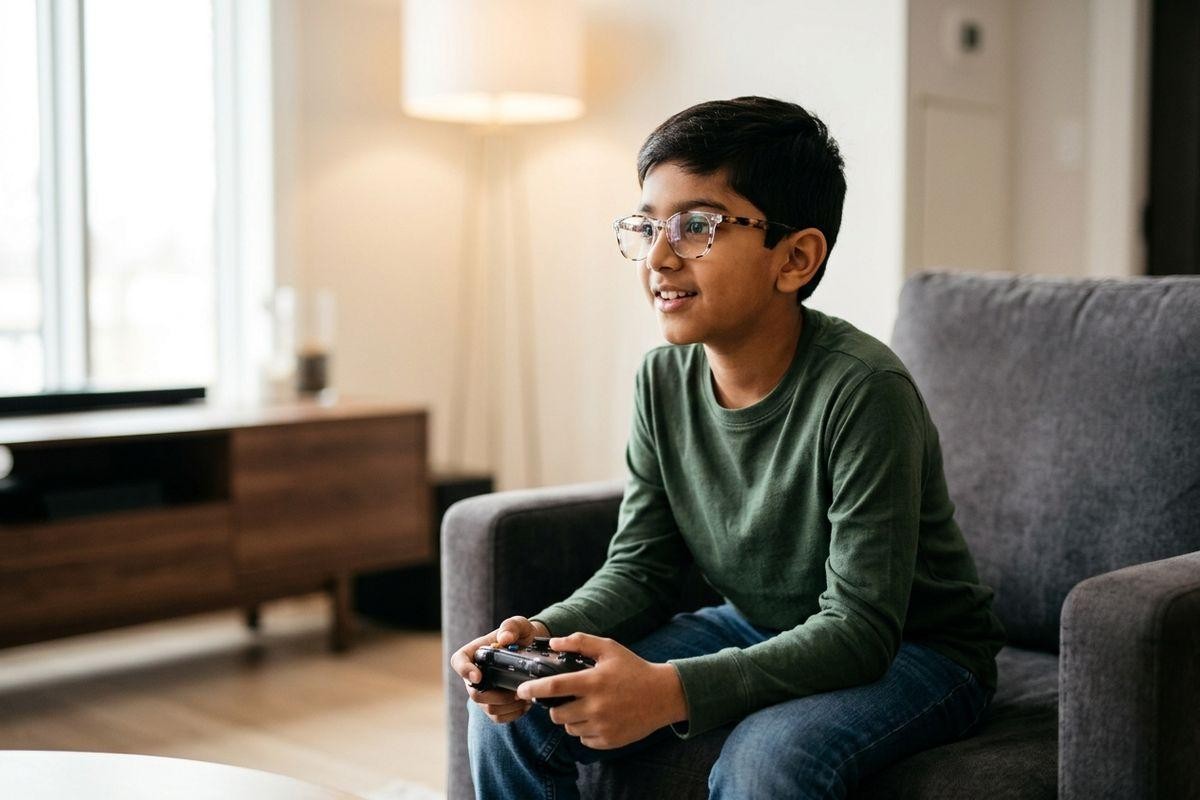
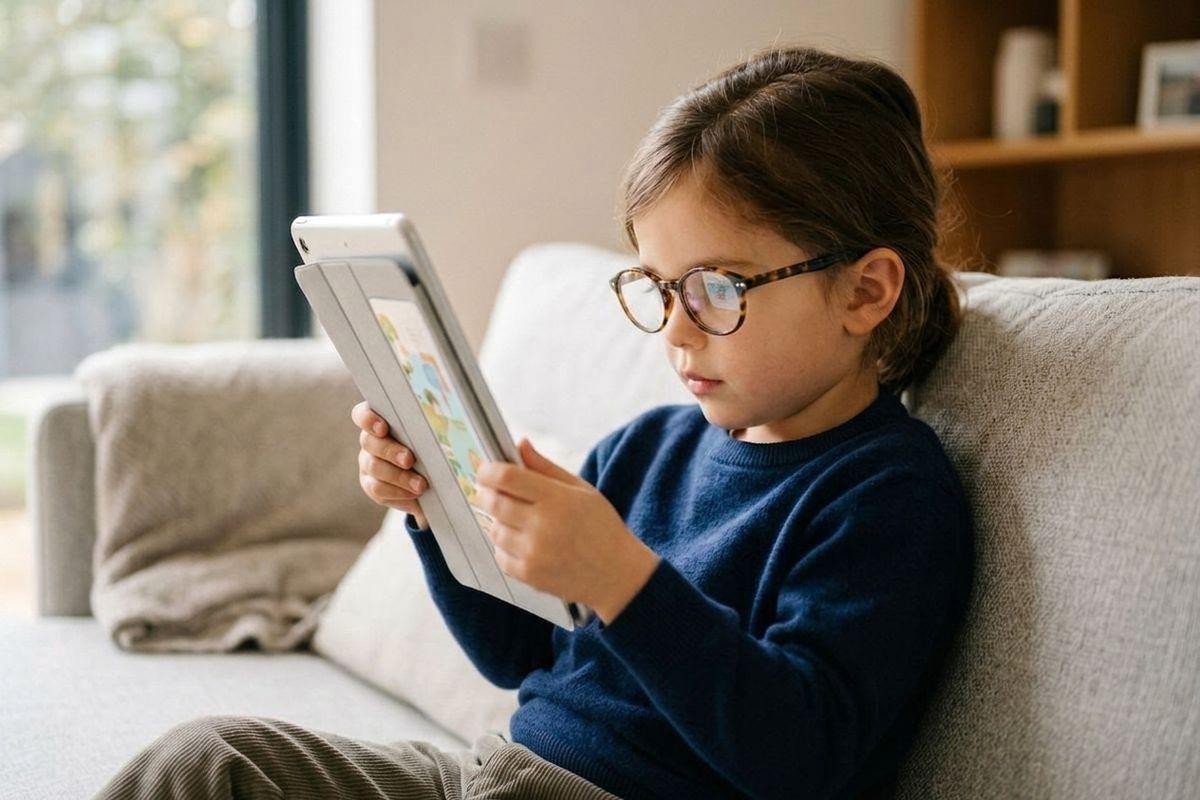
Your child just finished two hours of homework on a tablet, followed by an hour of gaming. By dinner, they’re rubbing their eyes and complaining of a headache. Sound familiar? Screens aren’t going away, but knowing what they do to young eyes can help you make smarter choices at home.
Screen time doesn’t directly cause myopia, but it can contribute to the condition’s progression.
At See & Be Seen Eyecare, we work with families to stay ahead of vision changes before they become bigger concerns. If you’re noticing changes in how your child sees, a children’s eye exam can help identify what’s going on.
How Much Screen Time Is Too Much for Kids
Screen Time by Age Group
Not all screen time is equal, and the right amount changes as your child grows. Here’s a simple breakdown of current recommendations:
- Under 2: no screen time, with the exception of video calls with family
- Ages 2 to 4: up to 1 hour per day
- Ages 5 to 17: no more than 2 hours of leisure screen time daily
School-related screen use often goes beyond these limits, which is why it’s important to protect your children’s eyes. We’ve put together a guide to eye strain in kids and how to manage daily device habits.
Signs Your Child May Be Overdue for a Children’s Eye Exam
Kids rarely say “my vision feels off.” They show it in other ways instead. We recommend watching for these signs:
- Sitting closer to the TV or holding devices closer to their face
- Frequent squinting, headaches, or rubbing their eyes
- Losing interest in outdoor activities or sports they used to enjoy
Any one of these signs is worth paying attention to. Together, they’re a strong signal that something is changing with your child’s vision.
Simple Habits That Help Protect Your Child’s Vision
The 3 Rules Worth Knowing
These three habits are easy to remember and genuinely useful for reducing digital eye strain in kids:
- The Elbow Rule: Screens should be kept at least an elbow-to-hand distance from your child’s face.
- The 20-20-20 Rule: Every 20 minutes, look at something 20 feet away for 20 seconds to give the eyes a break.
- The 2-Hour Rule: Cap leisure screen time at 2 hours daily to limit prolonged near focus.
Other Easy Adjustments at Home
Small changes to how your child sits and uses screens can add up. Encourage them to sit upright rather than lying down with a device, and position screens slightly below eye level. Also remind them to blink regularly during screen use. It sounds simple, but most kids forget, and dry, tired eyes are often the result.
Outdoor Time and Myopia Management
Time spent outside can be one of the most practical tools for slowing myopia progression in children. Natural light supports healthy eye development in ways that indoor environments simply can’t replicate. Even 60 to 90 minutes of outdoor time each day can make a meaningful difference. Research on outdoor time and myopia supports outdoor time as a way to protect children’s developing vision.
For children already diagnosed with myopia, a dedicated management plan can help protect their future vision. We recommend multifocal contact lenses that slow the progression of myopia, as well as ortho-k lenses, which are worn overnight and gently reshape the cornea.
When to Book a Children’s Eye Exam
What a Children’s Eye Exam Covers
A children’s eye exam goes well beyond reading a chart. It checks for early signs of myopia and digital eye strain, identifies vision changes that can affect reading and school performance, and includes contact lens fittings if needed. Catching a shift in vision early gives us more time to protect your child’s vision.
How Often Kids Should Have Their Eyes Checked?
Annual eye exams are recommended for school-age children. If your child is already managing myopia, more frequent visits allow our team to track changes and adjust their management plan. Children’s vision can change quickly, and regular check-ins help us stay ahead of those changes.
At See & Be Seen Eyecare, we take the time to understand your child’s vision, lifestyle, and needs. Book a children’s eye exam at our Liberty Village or Midtown location today and give your child’s eyes the attention they deserve.